
How Northwest winemakers are appealing to consumers in a changing market
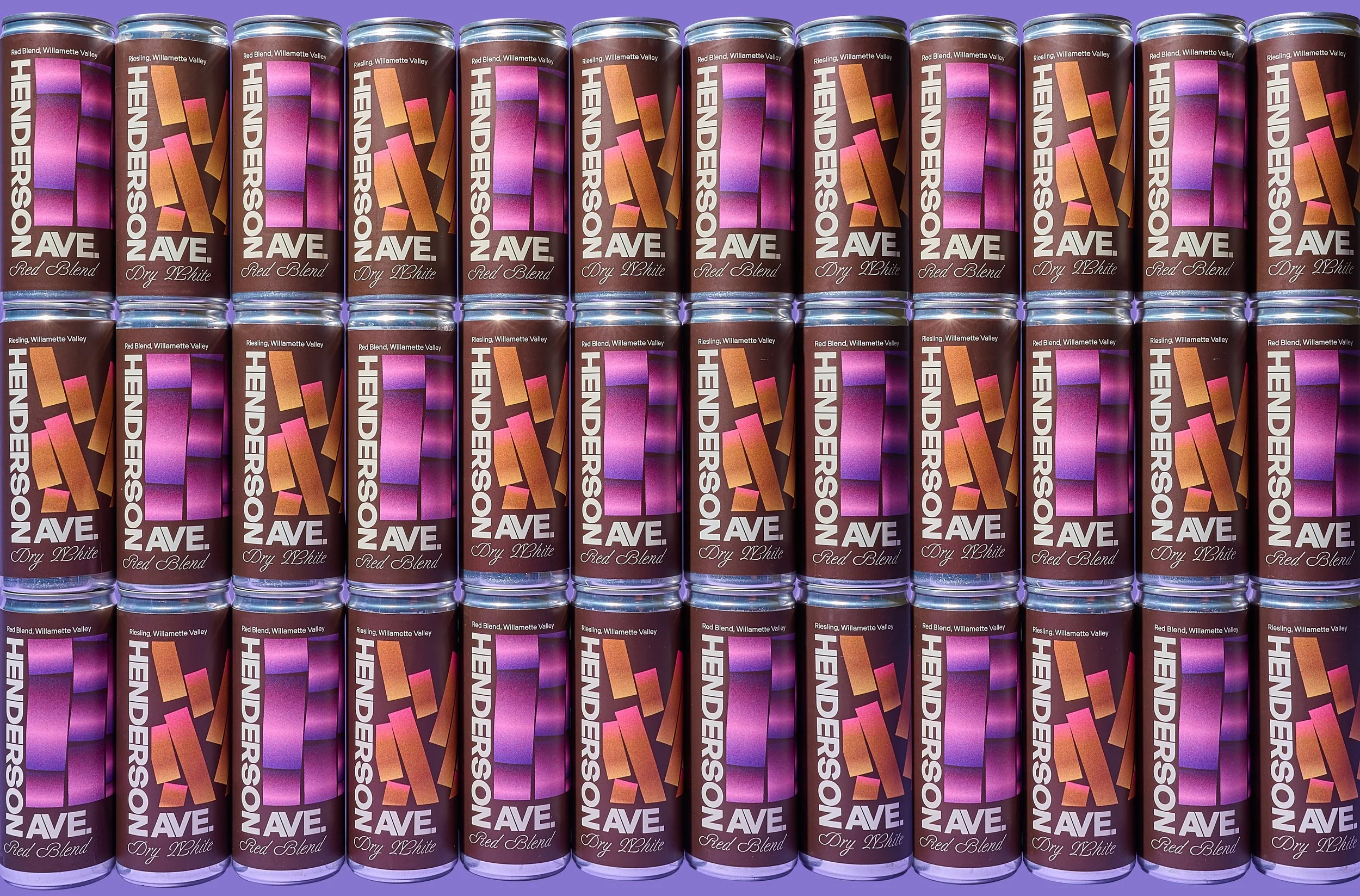
Henderson Ave Wines
Henderson Ave and Brooks Wine are two Oregon wine brands that operate at different price points, but are currently faced with many of the same questions: How do wineries appeal to consumers when American alcohol consumption has waned in recent years? How do producers ease barriers to entry for wine consumption and education? How do vintners approach sustainability when wine production is facing challenges due to climate change?
Tiquette Bramlett is the founder of Henderson Ave, a collection of canned wines that launched last year. Jen Cossey is the general manager of Brooks Wine. They both join us to share more about the state of Oregon’s wine industry.
Note: The following transcript was transcribed digitally and validated for accuracy, readability and formatting by an OPB volunteer.
Dave Miller: This is Think Out Loud on OPB. I’m Dave Miller. For almost 90 years, Gallup has been asking Americans if they drink any alcohol at all, or if they’re teetotalers. In the most recent poll, only 54% said they drink. That was the lowest rate ever. For wine in particular, per capita consumption has steadily decreased for the last five years.
So what is it like to be an Oregon winemaker right now? We’re going to get two perspectives on that today. Tiquette Bramlett is the founder of Henderson Ave Wines, [which] launched last year. It’s a Portland-based producer of a line of canned wines. Jen Cossey is the general manager of Brooks Wine, an award-winning winery in Amity that was founded in 1998. Tiquette and Jen, it’s great to have both of you on the show.
Tiquette Bramlett: So great to be here. Thanks, Dave.
Jen Cossey: Thanks for having us.
Miller: Jen, first – what led you into the wine industry?
Cossey: So my wine industry story, I don’t think it’s all that unique. I think a lot of people who are in wine, as we were talking about earlier, didn’t start with the intention of getting into wine. I was actually an art student and graduated with an art degree. I was living in San Francisco, and much like many people who live in San Francisco with art degrees, I needed a second job.
Miller: That meant serving?
Cossey: Yeah, something like that. I found a job at a little wine shop in the East Bay actually. I didn’t know anything really about wine at the time. I had waited tables at some basic restaurants previously, so I thought I knew a lot. I was like, “I know what wine is,” but the truth is I didn’t. So I got a job at the bar of this little wine shop, they had about 10 different wines open every week. And I had to learn a little bit about them because people were coming in and had questions. So that’s kind of how it started for me.
And then fast forward many years, I had an interest in learning more. So I got some sommelier certifications, some spirit certifications, and beer, and a yoga certification thrown in there too just for fun, and made my way from Kansas City, which is where I grew up, to wine country, and really wanted to move to Oregon to be immersed in it. And that’s how I found my way into Oregon.
Miller: Tiquette, what about you? My understanding from reading your bio is it’s at least as circuitous as we just heard from Jen.
Bramlett: Yeah, I like to say that wine really chose me in this story. I was an opera singer first, that’s what I went to school for. I thought that that was going to be my life. And every place that we went for work, I was always around wine. So there was a real curiosity with it. I’d be sitting at the bar listening to descriptors that people would give, and I’d be asking a lot of questions to the person pouring behind the bar because I always noticed that people were really engaged with it. But a lot of the profiles that they would give of the leather and the tobacco, I was always just wanting to know what the root of that was. But also, I just loved the conversations that grew out of that.
And when I graduated from college, life happened. I got hit by a drunk driver, got diagnosed with cancer. So during that downtime, that was when my mom had presented me with the Wine Bible and said, “read this, because you’re very curious about the source.” And the one thing that I really fell in love with reading that was noticing how the community would get involved with the entire process of harvest in the old world regions. And there was something to that for me, where you watch a community come together and create this product as a gift to the world. I thought that there was real beauty to that.
I went and got my somm certification. I defended Oregon in the room more than anybody. I was down in California. And my MW kept saying. “I think you should go to Oregon and explore that, and see what happens.”